
A 5 year old shoe size cannot be selected reliably from age alone. Measure both feet, use the longer measurement, and match it to the chart for the exact brand and shoe model. A size label is only a starting point: width, toe shape, socks, and the way the shoe fastens also affect comfort. This guide gives you five practical steps without inventing a universal age-to-size conversion.
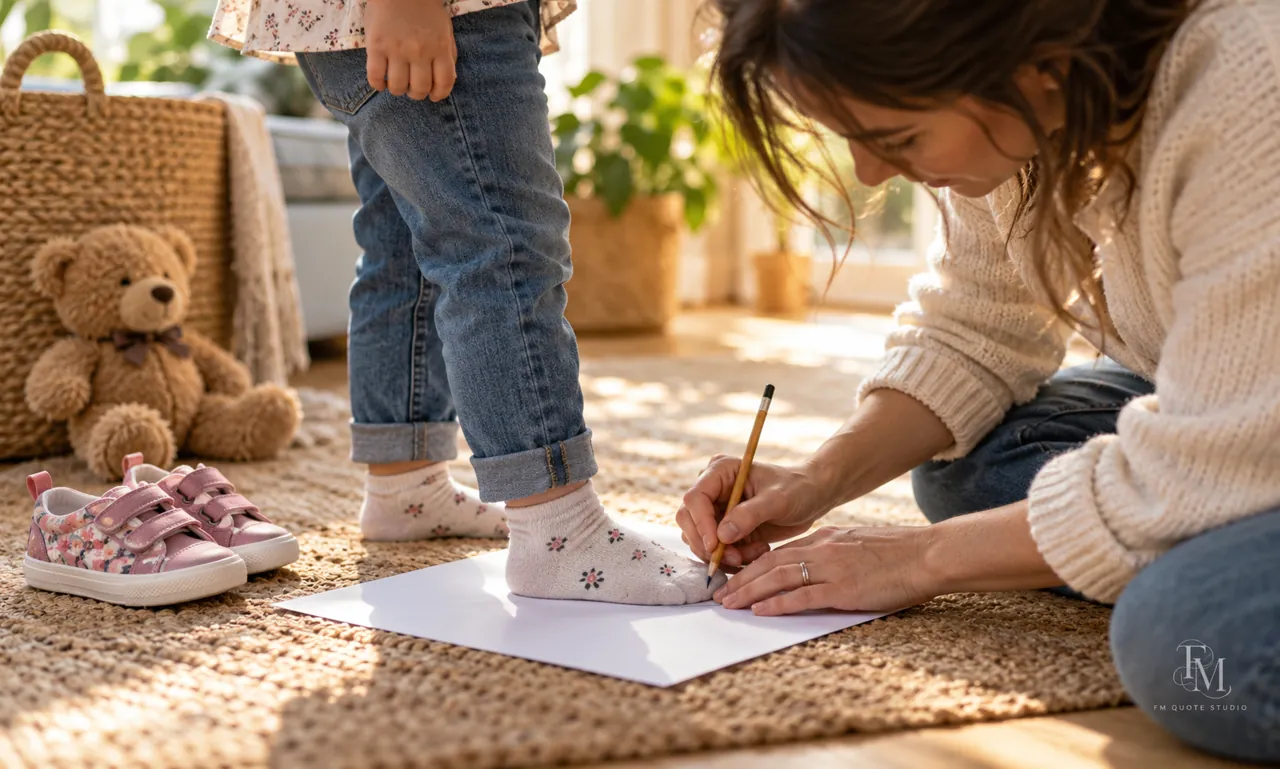
Table of Contents
Why a 5 Year Old Shoe Size Is Not One Number
Two children of the same age can need different sizes. Even one child can wear different labels across brands. US, UK, and EU systems do not use the same numbers, and a ‘C’ or ‘Y’ label belongs to the brand’s children’s sizing system. Do not confuse a 5-year-old child with size 5Y. The number after an age and the number on a shoe box answer different questions.
Step 1: Measure Both Feet While Standing
Use a firm, flat surface and the socks your child will wear with the shoes. Follow the brand’s measuring instructions; Nike’s guide describes tracing each foot on paper while the child stands with a heel against a wall. Measure from the heel to the longest toe. Record both results and the units. Do not assume the big toe is the longest or that both feet are identical.
If your child cannot stand comfortably, ask a footwear professional for help measuring.
Step 2: Use the Longer Measurement
Compare the two results and keep the longer one. For example, if one foot measures 17.2 cm and the other 17.5 cm, begin with 17.5 cm in the brand’s foot-length column. This example demonstrates the method only; it does not assign a shoe size. Measuring in centimeters can make small differences easier to record. Do not round down to force a child into a preferred size.
Step 3: Read the Correct Brand Chart
Check whether the table describes actual foot length, an insole measurement, or a regional size label. They are not automatically interchangeable. Nike’s current guide separates little-kid and big-kid sizes and distinguishes its CM/JP label from the foot-length column. If the foot falls between entries, follow that brand’s instructions; Nike recommends sizing up between sizes. Another brand may give different advice, so check rather than reuse a conversion from an unrelated chart.
Step 4: Check Width, Fastening, and Movement
Try both shoes, not just one. Make sure the fastening holds the foot comfortably and that the shoe does not squeeze across the widest part. Ask your child to walk, turn, and stop in an ordinary way. Watch for slipping, rubbing, or a change in how they walk. A larger label will not necessarily solve a width problem. A different width or shoe shape may fit better.
Step 5: Recheck Before Keeping the Pair
Keep the packaging and follow the seller’s return conditions. Try the shoes indoors on a clean surface before outdoor use. Ask about comfort again after a short wearing period; children may initially focus on the color rather than the fit. Stop using shoes that hurt. Ongoing pain, swelling, limping, or a persistent change in walking deserves professional advice rather than repeated guesses at shoe sizes.
What to Write Down When Shopping Online
Keep a short note with the date measured, left foot length, right foot length, the socks used, the chosen brand, and the size chart consulted. Add a note about width or an orthotic only when relevant. Recheck measurements before the next purchase rather than assuming the last size still fits. For a gift, ask the parent or caregiver for current measurements and a preferred brand instead of shopping by age.
Common Size-Chart Mistakes
Avoid treating an age range as a prescription, copying an adult conversion chart, adding extra length twice, or using a printed measuring guide at the wrong scale. Nike specifically asks users to print its measuring guide at 100% and verify the scale. A ruler laid against the outside of an existing shoe will not reliably tell you how much space the foot has inside. When in doubt, try the pair or arrange a fitting.
When comparing a 5 year old shoe size across brands, keep the measurement and the size label in separate columns on your shopping note. Record which foot was longer and which chart you checked. This prevents a familiar number from becoming an assumption. You can bring the note to a shop, but still assess the actual pair on your child’s feet.
An online search for a 5 year old shoe size is most useful as a reminder to measure, rather than a final answer. Before ordering, find the chart for that specific product and check whether it lists foot length or another measurement. Read the retailer’s fitting instructions carefully. If the chart is unclear, ask the seller instead of guessing from a different brand.
To compare two possible pairs for a 5 year old shoe size, keep the trial conditions similar. Use the same socks and have the child walk in each pair on a suitable indoor surface. Ask simple questions about how each feels. A favorite color or character can influence the choice, so invite the child to describe the fit as well as the appearance.
Write a short 5 year old shoe size record with the date, both foot measurements, the units used, the brand, the model, and the size tried. Add a plain note such as ‘felt tight at the front’ or ‘heel moved during walking.’ This creates a useful shopping history without assuming that the next pair will need the same label.
If you are buying a gift, ask the parent for a current 5 year old shoe size measurement or choose a retailer with a practical exchange policy. A label from an older pair may be outdated or belong to a different sizing system. A gift receipt and a flexible choice are more helpful than an exact-looking number based only on age.
Check whether a 5 year old shoe size listing uses US, UK, or European labels before comparing it with another shop. Do not mix the numbers into one universal chart. Keep the original retailer’s units visible in your notes. When a product offers its own fitting guide, use that guide for the purchase rather than a general conversion found elsewhere.
A 5 year old shoe size decision also depends on the kind of shoe you are buying. A sandal, school shoe, or trainer may have a different shape and fastening, even when the size label matches. Follow the manufacturer’s instructions for that design. Avoid assuming that a successful fit in one style guarantees an identical fit in another.
When checking a 5 year old shoe size at home, make the task calm and brief. Prepare the measuring materials first, explain what you are doing, and measure again if the child moved. You can turn the shopping note into a simple checklist together. There is no benefit in rushing toward a precise-looking result that you do not trust.
Keep the packaging while assessing a new 5 year old shoe size, and read the return conditions before removing labels or wearing the shoes outdoors. Compare the pair with your notes, then let the child try both shoes as the retailer permits. Returning an unsuitable pair is more useful than keeping it because the printed size seems correct.
Finally, treat your 5 year old shoe size record as a snapshot. Recheck before another purchase, and pay attention when your child says a pair no longer feels comfortable. The goal is a suitable pair for the feet in front of you today. This guide offers a shopping method; it does not assign one required size to all five-year-olds.
A Practical 5 Year Old Shoe Size Shopping Worksheet
Start with a blank record. Write the date and the units you are using before taking a measurement. Leave separate spaces for the left foot and right foot. Beside them, record the instructions you followed. A 5 year old shoe size note is easier to reuse when you can tell which numbers came from your child’s feet and which came from the shop’s chart.
Record the exact product. Note the brand, model name, sizing system, and chart location. Two shoes sold by the same retailer may use different fitting guidance. Keep the product page available while you compare. If the chart describes a measurement you have not taken, follow its instructions rather than substituting a number that merely looks similar.
Make a short comparison. For each pair tried, record the label and a few words about the child’s response. You might write, ‘preferred the fastening’ or ‘asked to remove the left shoe.’ Keep observations separate from assumptions about what the child should prefer. The aim of a 5 year old shoe size comparison is a suitable choice, rather than proving that a particular number is correct.
Prepare a question for the seller. If something is unclear, ask a specific question: ‘Does this chart show measured foot length, and is it for this exact model?’ Include the sizing system you are looking at. A clear question is more useful than asking which size every five-year-old wears. Keep the reply with your shopping note so you can check it again.
Let the child describe the pair. Ask one simple question at a time while they try both shoes as the retailer permits. Give them time to answer instead of immediately suggesting the response. You can ask what feels different between two pairs without saying which one you expect them to choose. A 5 year old shoe size label should support that conversation rather than replace it.
Finish the purchase record. Add the pair chosen, the date, and any exchange deadline. Keep the receipt and packaging according to the seller’s conditions. If you decide neither pair suits, record that too. Leaving a shop without buying can still be a useful outcome when it helps you understand what to look for next.
Use the worksheet again carefully. Before a later purchase, take fresh measurements and consult the new product’s guide. The old record can remind you which questions to ask, but it should not supply an automatic answer. This keeps your 5 year old shoe size research practical even when shops, styles, or sizing systems change.
Related Family Reading
For words to pair with your family moments, explore parenting is hard quotes, little boy quotes, caption for daughter, family photos with quotes. Choose a message that reflects your own experience.
Sources and Further Reading
Nike children’s footwear measurement guide and Nike regional children’s shoe-size chart offer further background. The name ideas, stories, activities, and shareable lines in this collection are editorial suggestions.
Frequently Asked Questions
What shoe size does a five-year-old wear?
There is no single correct size. Measure the child’s feet and use the exact brand’s chart.
Is size 5Y for a five-year-old?
No. 5Y is a size label, not an age instruction.
Should I measure both feet?
Yes. Use the longer foot measurement when applying the brand’s guide.
Can I use the same size across brands?
Do not assume it. Check each brand’s chart and try both shoes.
Should I buy a much larger pair to last longer?
Oversized shoes can slip and fit poorly. Follow the brand’s fitting advice rather than choosing a large size simply for future growth.
Pingback: Newborn Clothes Sizes: 5 Tips for Finding the Right Fit