
These 10 birthday game ideas make a children’s party easier to plan, with simple rules, suggested ages and supplies for each activity. Choose from active games, quiet options and cooperative challenges. Adapt the games to the children attending, your available space and the adult help on hand.
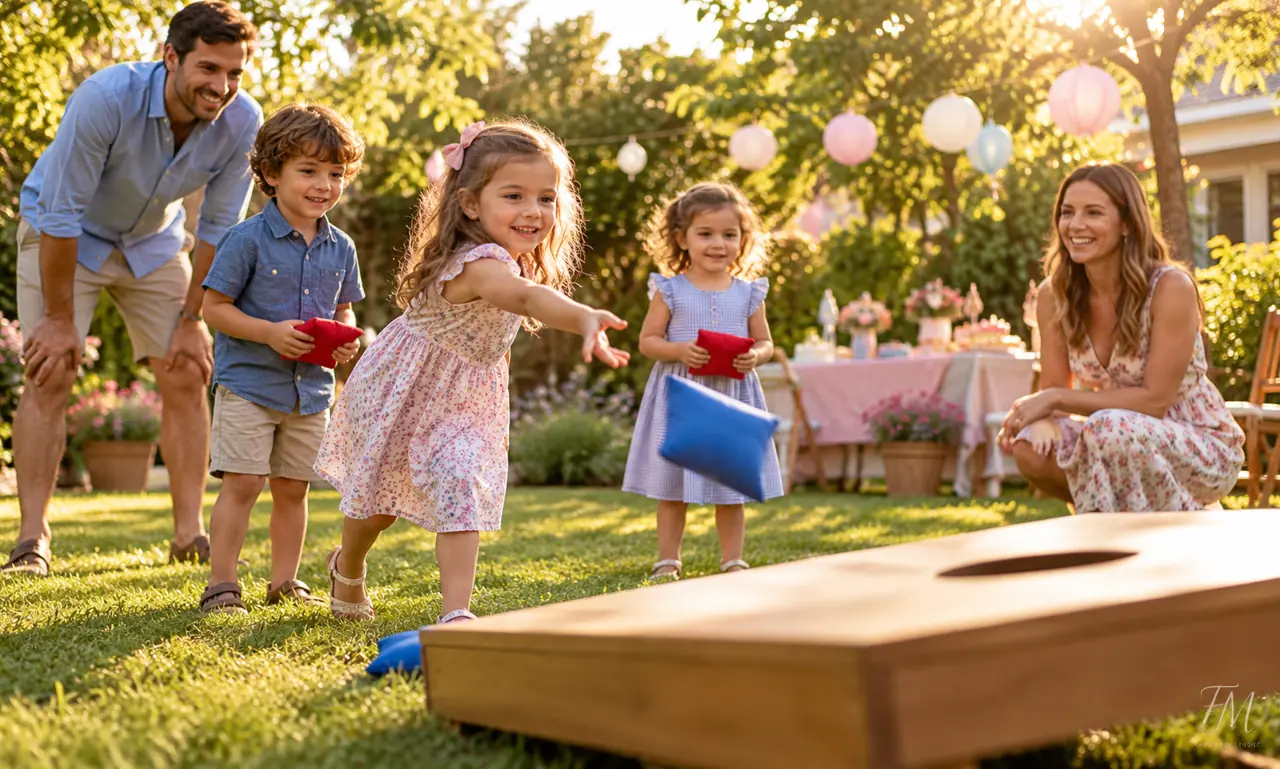
Table of Contents
Choose a Birthday Party Game That Fits Your Guests
For a small indoor gathering, begin with a seated game and one movement activity in a clear area. Outside, use marked boundaries and keep throwing games away from food and walkways. Ask parents about accessibility or sensory needs in advance. Children should be able to watch, join later, or choose a quieter activity without being singled out.
1. Beanbag Target Toss
Best starting point: ages 3–7 with supervision. Supplies: soft beanbags and large baskets. Put the baskets on stable ground and mark a throwing line. Each child throws three bags, then helps collect them after the round. Move the line closer for younger guests. For a cooperative version, count how many bags the whole group can land in the baskets; no one needs to be eliminated.
2. Freeze-and-Pose Dance
Best starting point: ages 3–8. Play music at a comfortable volume. When it pauses, everyone makes a funny pose. Instead of removing anyone who moves, invite the group to copy a new pose for the next round. Seated guests can freeze their hands or shoulders. Keep the floor clear and avoid sudden very loud sound effects.
3. Picture Treasure Hunt
Best starting point: ages 4–8. Hide large picture cards in visible, reachable places. Give small teams matching picture lists. They find the cards and point them out to an adult rather than racing to grab them. Use a shared finish line: the group wins when every picture is found. Avoid hiding places near roads, water, sharp tools, or private rooms.
4. Pass the Drawing
Best starting point: ages 5–10. Give each child paper and a washable marker. After a short drawing turn, pass the paper around the circle. Each person adds something. Finish by giving every picture a silly title. Children who dislike timed turns can keep one page and draw alongside the group. The aim is a surprising shared picture, not the best artwork.
5. Animal Action Circle
Best starting point: ages 3–6. An adult names an animal, and everyone chooses a small movement or sound. A penguin can be a gentle side-to-side shuffle; a bird can be hands opening like wings. Keep movements within each child’s comfortable range. Let children offer alternatives, and avoid any action that requires climbing on furniture.
6. Team Cup Tower
Best starting point: ages 5–10. Use lightweight reusable cups. Teams build a freestanding tower on a table or floor mat. Give everyone a role: builder, cup passer, tester, or encourager. After a collapse, ask what they want to try differently. Score creativity or teamwork rather than speed, and collect all cups before switching activities.
7. Birthday Picture Bingo
Best starting point: ages 4–9. Make cards with simple images such as a cake, gift, hat, and candle. An adult calls or shows one image at a time. Children cross it out with a crayon rather than using small loose counters. Keep playing until everyone has completed a row. A homemade card works perfectly; no paid printable is necessary.
8. Sock-Pair Relay
Best starting point: ages 5–9. Mix clean socks in a basket and ask teams to find pairs. Walk rather than run indoors. Make the task cooperative by setting a group target instead of competing against another team. For a quieter version, spread the socks on a table and let guests solve the puzzle together.
9. Guess the Birthday Drawing
Best starting point: ages 6–11. One child draws a simple party-related word while others suggest answers. Allow the artist to choose between two prompts. Give hints rather than judging drawing skill. Children can work in pairs if drawing alone feels uncomfortable. Use familiar words such as cake, ribbon, music, and present.
10. Kindness Card Station
Useful across ages with help. Set out folded paper, crayons, and stickers appropriate for the guests. Children draw or write one kind wish for the birthday child. An adult can write dictated words. This is a calm ending after movement games and gives the host a keepsake. Do not require every child to read their message aloud.
A Relaxed One-Hour Game Plan
Try ten minutes of drawing as guests arrive, ten minutes of target toss, five minutes for water and a rest, ten minutes of treasure hunting, ten minutes of bingo, and fifteen minutes for cards or free play. Treat this as a flexible example. Stop a game while children are still enjoying it, and keep a backup quiet activity ready. An adult should supervise throughout; skip balloons, small loose game pieces, and food-based challenges when younger children may be present.
Before the party, prepare a small instruction card for each activity. Write the supplies, the place where it will happen, the adult helping, and one simple way to make it easier. Keep the card with the materials. This lets another adult step in without asking the host to explain every detail while welcoming guests or serving food.
Introduce a game with a demonstration instead of a long speech. Show one turn, invite a volunteer if appropriate, then let everyone begin. Keep the first round unscored so children can learn what to do. If the rules are confusing, simplify them before continuing. A clear shared experience is more valuable than keeping every rule from your original plan.
Think about transitions as part of your party plan. Tell guests when the current round will finish, collect the materials, and point out the next activity. Leave time for a drink or a quiet pause between movement games. Children who enjoyed the previous activity can be invited to return to it later if supervision and space allow.
For a small budget, reuse supplies across several games. Paper can become bingo cards, shared drawings, and kindness notes. Baskets used for target toss can hold the materials afterward. Choose a few complete activities rather than many half-prepared stations. You can make the room inviting with a clear play area and a friendly welcome.
Keep a simple backup plan for a change of weather. An outdoor picture hunt can become a tabletop matching activity using the same cards. A running relay can become a seated sorting task. Tell the children what the new version will be and offer a demonstration. Changing the plan calmly helps preserve the fun without treating the indoor alternative as a disappointment.
At the end, invite each child to name a favorite moment if they want to. Thank the adults who helped and save the birthday cards or shared drawings together. You can note which activities were easy to run and which needed too much explanation. That short record will make the next gathering easier to plan.
For target toss, place the empty basket where everyone can see the opening clearly. Give one demonstration from the throwing line, then let children choose a comfortable starting distance. You can offer a wider basket for one round and a narrower one for another without comparing individual scores. Ask guests to wait until all throws are finished before collecting beanbags. An adult can return the bags if the play area is crowded.
For freeze-and-pose dance, explain the pause signal before starting the music. Try one practice round with a slow change so nobody has to guess what is happening. Let a child suggest the next pose, such as a tall tree or a tiny mouse, while keeping movements comfortable. If someone prefers to watch, they might choose a pose or help an adult pause the music. Participation can take more than one form.
For the picture treasure hunt, show the group one sample card and explain how to report a find. Use pictures that are easy to tell apart, and keep a spare list for the adult supervising. Children can work with a partner rather than search alone. If one card is difficult, offer a clue about color or location. End when the group has found the set, then collect every card before opening the space for another activity.
For pass the drawing, begin with a simple mark on each page so nobody faces an empty sheet. Tell everyone that the next person is allowed to add something different, without crossing out another child’s contribution. Keep the turn length flexible and avoid taking a picture away before someone understands the change. At the end, let the group describe the surprising picture together. It does not need to belong to one winner.
For the animal action circle, prepare a few familiar examples and invite alternatives. A child can suggest an animal while another chooses a small action to represent it. Keep the circle spacious and let seated participants use hands, expressions, or sounds. If the activity becomes too noisy for the group, switch to silent animal poses. That change can become part of the game rather than a reprimand.
For the cup tower, decide whether children will build one shared structure or several small ones. Give each group a clear building space and enough cups to begin. Invite them to describe what they want to try before starting again after a collapse. You can photograph the finished structures with permission, then ask everyone to help take them apart. The final cleanup can be the closing cooperative challenge.
For picture bingo, demonstrate how to match an image and mark it on the card. Call the pictures slowly enough for children to look, and repeat the name when needed. An adult can sit beside a child who wants help. Keep a visible collection of the pictures already called so nobody has to rely on memory. Continue for another row if the group is enjoying it, without requiring every card to be completed.
For the sock-pair activity, choose socks that are easy to distinguish and use a limited number at first. Give the group a chance to examine the patterns before mixing them. Younger guests can match by color while older ones compare details. If children enjoy making up stories, ask who might wear the imaginary pair next. Keep the activity on a table or mat when the room has little clear walking space.
For guess-the-drawing, prepare prompts in two simple groups: familiar objects and party actions. Let the artist select an easier prompt or work with a partner. Explain that guessing is welcome but teasing the drawing is not. If the group gets stuck, offer a clue or reveal the answer and continue. Nobody needs to remain in an uncomfortable spotlight while others become impatient.
For the kindness-card station, offer an example with one short message and a simple drawing. Invite children to make their own choice rather than copy it exactly. Put completed cards in a clearly marked place so they do not get lost among supplies. A child who would rather draw than write can do that. An adult can collect the cards for the host without asking everyone to perform a public reading.
When planning for a large guest list, avoid opening more stations than the available adults can supervise. You can run the same activity in small groups or choose one shared game with short turns. Tell guests where to wait and what they can do while waiting. A drawing table may offer a quiet option if an adult can remain nearby. Keep movement routes separate from food service and the entrance.
Finally, judge the plan by how the gathering feels, not by how many activities you finish. If one simple game holds the group’s attention, allow it more time. If guests are tired, move to cards or free drawing. You can save unused supplies for another day. The birthday child does not need a perfectly timed program to enjoy being welcomed, included, and surrounded by people who care.
A Birthday Game Plan You Can Hand to a Helper
Write a one-page plan with four columns: activity, supplies, adult helper, and a quieter alternative. For example, target toss needs beanbags and baskets, one adult to manage turns, and a seated version for anyone who prefers it. A drawing activity needs paper and washable markers, with a place for finished artwork. Keep the page near the supplies so helpers can find it without interrupting the host.
At the start of each birthday game, tell guests three things: where to stand or sit, what happens on a turn, and how the round ends. Show those steps once. Ask whether anyone would like a practice turn, but avoid putting a child on the spot. If several guests look unsure, demonstrate again with fewer rules.
Choose a clear finish for the last birthday game. That might be one shared tower, a completed drawing, or a basket of kindness cards. Tell the group when you are moving on, thank them for joining, and give them time to put supplies away. A calm ending helps children understand the change without needing to rush through another competition.
After the party, keep only the notes that will help next time: the activity everyone returned to, the supplies you actually used, and the change that made a game easier. You do not need to record individual winners or compare guests. A reusable plan should help the adults feel prepared and give the children room to enjoy themselves.
Related Family Reading
For words to pair with your family moments, explore funny belated birthday wishes, caption for daughter, son captions, family photos with quotes. Choose a message that reflects your own experience.
Sources and Further Reading
UNICEF parenting resources and picture bingo design inspiration offer further background. The name ideas, stories, activities, and shareable lines in this collection are editorial suggestions.
Planning a different family occasion? Check when Children’s Day is celebrated before choosing a date, or adapt these summer vacation activities for families for a less structured day together.
Frequently Asked Questions
What is an easy party game for mixed ages?
Beanbag target toss is easy to adapt by changing the distance. Keep the rules simple and give everyone a turn.
How many games do I need?
Three or four planned games plus a quiet backup are often enough for a small party. Follow the group’s attention rather than a rigid list.
Can children play without prizes?
Yes. Cooperative goals, funny poses, and shared drawings can be enjoyable without ranking guests.
What works in a small room?
Picture bingo, pass the drawing, and a kindness card station need relatively little movement.
What if a child does not want to join?
Offer a calm alternative and a chance to join later. Avoid forcing participation or making it a public issue.